Wednesday, November 16, 2022

A New Strategy to Build Sustained Peace?

Earlier this week (week #2 of COP27), I attended an event at the U.S. Center entitled Fragility, Conflict, and Climate Change: A New Strategy to Build Sustained Peace. Not only did the session title catch my attention, but also, in the introduction to the session, it was mentioned that our Department of Defense had its first ever delegation at a COP and their representative in the session was the sustainability director for the DOD. Last year, during a stakeholder roundtable with Gina McCarthy (then first White House National Climate Advisor for President Biden), the mandate requiring all agencies within the federal government to consider climate change in terms of solutions, national strategies, and efforts to reduce the carbon footprint of the U.S. government was discussed at length. (See a previous post about this event.) It appears that some of this is happening!


As with every session at a COP, several sound-bytes and a lot of jargon and acronyms were used: 

  • HDP nexus (HDP = Humanitarian Development and Peace)
  • DRR (Disaster Risk and Reduction) 
  • PREPARE 
  • Emergency Adaptation and Resilience
  • Feed the Future 
  • Global Fragility Act (I hadn’t heard of this before) 
  • 3D (Defense, Diplomacy, Development) or 5D (adding Defining Decade before the three previous terms)
Instead of talking about the details of each of these, I have included some references at the end of the post. The "cliff notes" version is that to achieve peace, we need to provide development aid in conflict-prone regions, address food and water insecurity to prevent new conflict and displacement (or "human mobility" as is the phrase at COP27), and address climate change – in an integrated fashion. Apparently, there is now a commitment to interagency cooperation within the U.S. government representing a degree of collaboration that hasn’t happened in the past.

One might ask whether it takes threats of war to move us to action on other fronts such as humanitarian aid or climate change. And for some reason, having representatives from US Agency for International Development and the DOD (aka Pentagon) on the stage together oddly reminded me of the very unsettling book by Dave Eggers, The Parade. (A partial description of this book from Amazon.com: An unnamed country is leaving the darkness of a decade at war, and to commemorate the armistice the government commissions a new road connecting two halves of the state. Two men, foreign contractors from the same company, are sent to finish the highway.

Setting aside the cynicism and looking at global problem-solving through the lens of a scientist, the idea of having science and foreign aid as arms of diplomacy and peacekeeping isn’t inherently a bad idea. The prestigious organization, the American Association for the Advancement of Science (AAAS), even has a Center for Science Diplomacy. Scientific discoveries can lead to clean energy technologies, carbon removal mechanisms, and climate-resilient agriculture as well as provide the data and monitoring for early warning systems. If we can overcome barriers such as intellectual property and technology transfer, innovative technologies arising from science might help address climate change mitigation and adaptation, protect livelihoods and lives, and enhance food security. Can sharing innovations from research and development be considered foreign aid? 

The U.S. Center panel discussion and these random post-session reflections have me thinking about how we, as educators, might prepare future diplomats and agency staffers who can work across agencies, national boundaries, and disciplinary specializations. Alas, too often, those of us in higher education still work in silos (disciplinary-specific departments). Distinct packets of information are taught through these departments, sometimes even more finely subdivided (e.g., biochemistry vs. ecology as opposed to thinking about "life sciences" holistically). There are, of course, examples of campus interdisciplinary centers developed around key themes, and some academic programs are, by nature, dependent on interdisciplinary collaborations, including the environmental sciences and studies. But in such programs, do we have students work at the interface of policymaking, consider transnational-boundary issues, or evaluate the ethical dilemmas of technological “solutions” especially if they are implemented and impact people who have had no say in the decision to deploy? In higher education speak, if a program like environmental studies includes an array of requirements across disciplines, are these requirements integrated in intentional ways? Do students understand why they are taking the different requirements and the interrelationships between what they are learning in different courses? Do they realize that the information can and should be applied to solve complex global problems? Do students (and faculty) feel comfortable working across language and cultural differences – both across disciplines and national borders? 

The American Association of Colleges and Universities (AAC&U) are advocates of liberal education and a 2020 publication entitled “What Liberal Education Looks Like” which is described as: 
In distilling the principles, practices, and contemporary challenges of liberal education, this signature AAC&U publication presents a clear vision of the learning all students need for success in an uncertain future and for addressing the compelling issues we face as a democracy and as a global community – regardless of where they study, what they major in, or what their career goals are. 
The American Council on Education, in discussing their global learning outcomes, refers to international education and education diplomacy

At Moravian University, we have had a unique cross-cutting academic program known as InFocus that had its roots in discussions going back to 2010. In my opinion, it was a rare example of interdisciplinary teaching, scholarship, debate, collaboration, problem-solving, service, and advocacy. The program focused on 4 key thematic areas reflecting grand challenges of the 21st century:
  • Poverty and Inequality
  • Sustainability and Eliminating Environmental Degradation
  • Health and Justice
  • War and Peace 
This program was named to the Phi Kappa Phi Honorable Mention list for the 2020 Excellence in Innovation Award which, according to the Phi Kappa Phi website is “given once per biennium, recognizes one institution of higher learning for achievement in finding powerful answers to important local, regional, national or global challenges.” In the portfolio submitted for this recognition (CONFRONTING GLOBAL CHALLENGES: 2020 Phi Kappa Phi Excellence in Innovation Award Portfolio), the program was described as follows: 
InFocus grew from a 2010 series of dialogues held by small groups of faculty at Moravian College who pondered the question how can we better link our educational mission with the real problems and needs that face all of us, both locally and globally? We deliberated about the most pressing sets of problems facing humanity, and how to shift our common educational life to seriously address them. We questioned how to link research, advocacy, and action; increase multidisciplinarity; and multiply alliances between our college, the local community, and the wider world. We stressed the need for students to envision their education in accordance with their lives beyond the college campus. This critical dialogue led to the eventual spearheading of an open-ended, ambitious cross-college initiative, InFocus at Moravian College, that would be organized around four yearly rotating “Centers of Investigation.” Each year the Moravian College community dedicates itself to one “challenge area” facing humanity that demands greater investigation, understanding, imagination, collaboration, and advocacy if we are to build toward a more sustainable, just, and democratic society. 
For reasons many of us cannot understand, the upper administration recently announced that this would be the last year for InFocus. The stated reasons were that this program it is not something that attracts students to the institution or retains them (although I have no idea how they know that), and it wasn't included in the institutional strategic plan. (For that matter, neither are most of the existing academic programs.) What those of us who have participated in the program know, through program assessments as well as student testimonials, is that students demonstrate intellectual growth and have a greatly expanded view of the world and a sense that they can make a difference in that world. It is more difficult to measure or even articulate what value this has had for faculty, but, personally, the impact has been profound.

Given the theme of the event I attended at the U.S. Center, it is perhaps ironic that the InFocus theme this final year is "War and Peace". In an InFocus event earlier this year, one of the faculty co-directors handed me a pin that says “The more you sweat for peace, the less you bleed in war.”

I am wearing this pin here at COP27

I doubt that whoever created this slogan was linking climate change (global warming) and peace. However, perhaps some of that sweat equity needs to be directed towards addressing climate change which, in turn, will reduce conflict and come with many other co-benefits (food and water insecurity, better health, sustainable development, etc.) 

[An interesting note: 5-5 ½ % of global greenhouse gas emissions are from war and military action. I don't have a source, but this was mentioned in the Emissions Gap 2022 report launch here at COP27 when someone asked about the consequences of the Russian - Ukrainian war on climate action. My friend Heidi Svestre, a glaciologist, noted that one consequence -- largely because Russia is currently chairing the Arctic Council -- is that the work of the council has been suspended, including critical polar research in the Arctic.]

Some sources for further reading

On the humanitarian-development-peace nexus:

A short brief entitled The Humanitarian-Development-Peace (HDP) Nexus: Challenges in implementation

A report entitled The Humanitarian-Development-Peace Nexus: What does it mean for multi-mandated organizations? 

On PREPARE:

The PREPARE action plan (a U.S. initiative)

Action Plan Released for the President's Emergency Plan for Adaptation and Resilience (PREPARE)

National Security Strategy (interagency cooperation)

On the Global Fragility Act

The 3 D's publication  

2022 Prologue to the United States Strategy to Prevent Conflict and Promote Stability 

The Global Fragility Act  

A press release on this act 

Thursday, November 10, 2022

Hotel Prices and the Local Economy

 This year, one of the early concerns for attendees was finding affordable lodging.   Many booked hotel rooms months ago, only to find that the reservations were cancelled and they were rebooked at much higher prices.  Rooms booked for $100 are now booking for $500 or more.  The ECO-NGO Newsletter writes that "COP observers have the right to a safe, secure and accessible accommodation, at the prices agreed to when reservations were confirmed, and not to be left out on the streets."  To me, that seems like a common-sense request ... especially since I had booked a year ago and was afraid until the moment we checked in that I would be one of the people on the street! 

However, today I took a taxi to another part of town for a sponsored panel discussion.  I ended up at a hotel that had only a skeleton security staff in what looked like a once-thriving but now abandoned part of the city. There were no residents at the hotel -- they were renting out a couple of meeting rooms to an organization for meetings. This is the other story of Sharm el-Sheikh.  Many of us are staying at the (mostly newer) hotels that have managed to stay open.  But daily we pass dozens of abandoned construction sites left undone.  Other hotels and venues are simply boarded up. Other than the construction of the COP facilities, there is no current construction.   

According to my taxi driver, Sharm el-Sheikh was booming in 2015. Resorts were being built, and the infrastructure was updated. The first blow was when the Islamic State claimed responsibility for downing a Russian plane, which caused a six-year moratorium on direct flights. Then, COVID hit tourism hard, and everything was put on hold.  Just as tourism started up again, with Russians and Ukrainians representing the bulk of the tourists, Russia invaded Ukraine.  I remember reading an article at the time talking about how the resorts were beginning to recommend different restaurants to the tourists, in an effort to keep the peace.  So now, there are no Ukrainian tourists, and the Russians are much fewer in number.  There are some tourists from other countries, but not as many.

In addition to the severe reduction in tourists for Sharm, Egypt is also facing its own financial concerns.  Six years ago, Egypt was forced to devalue its currency and take out a loan from the International Monetary Fund. Like much of the world, they are experiencing inflation, reaching 18% in September. It is estimated that the Egyptian pound has lost up to 25% of its value against the US dollar in 2022 alone, and foreign investments are dwindling. 

With this backdrop, I am just a bit more understanding about the letter from the Egyptian Hotel Association to the Sharm-el-Sheik hotels describing the UNFCCC as a "unique tourism opportunity."  This letter, as reported in the ECO-NGO Newsletter,  suggested the higher pricing models, with five-star hotels charging at least $500/night.  With much of the pricing from taxis to meals stated in US dollars, the COP must have been seen as a temporary relief from a dismal outlook.  

Unfortunately, there have not been appropriate alternatives for the young activists or others for whom even $120/night is out of reach, and suggestions like camping venues were turned down by the Egyptian organizers.  While I understand the price gouging a bit from the local perspective, there must be more done to be inclusive and inviting to the civil society observers.  


Wednesday, November 9, 2022

Will We Be Drawn to Action With Art?


Most years, Diane Husic and I teach a course about climate change and negotiations, and we have always discussed the importance of art for communicating climate change.  In this blog, we have highlighted art installations at the COPs over the past decade. This year, I was happy to see that art was highlighted at the Egyptian pavilion.  As the host country, Egypt has one of the most prominent and largest pavilions at the COP.  This year, they have chosen to exhibit the "natural heritage, biodiversity, and Egyptian culture linking humanity to nature through the expression of art."  There are four or five large areas in the pavilion, and walking through them is much like strolling through a museum. Check out the "Pava Bean Bronze Sculpture" or the lovable "Garden Creatures" at the base of the "Tree of Mary." 


So, yes, despite my love and support for the arts, and my genuine belief that arts have an important role in communicating climate change, I'm a bit puzzled.  At the nearby pavilions for UK/Scotland (COP 26 host) and United Arab Emirates (future COP 28 host), the exhibits are about education and solutions.  Scotland shows off a virtual reality platform, with its awe-inspiring "Space Safari," while UAE features interactive exhibits on solutions ranging from mangroves to hydrogen.  For COP 27, however, Egypt is not using their platform to tout their achievements.  I appreciate that there is a lot of discussion about "nature-based solutions," but these artworks are more of a celebration of nature. So is that the message?  We need to celebrate and preserve our natural world? It may be.  The artwork is beautiful, and hopefully it will inspire the parties to increase their ambition to "keep 1.5 degrees alive."


Tuesday, November 8, 2022

Welcome to COP27: Another year, another COP


Since 2009, Moravian University has sent a delegation of observers to the COPs (Conference of the Parties) – the annual meetings of the signatories (“Parties”) to the United Nations Framework Convention on Climate Change or UNFCCC. In a welcome message to COP27 attendees, Abdel Fattah El-Sisi, President of the Arab Republic of Egypt said: 
COP27 in the green city of Sharm El-Sheikh this year marks the 30th anniversary of the adoption of the United Nations Framework Convention on Climate Change. In the thirty years since, the world has come a long way in the fight against climate change and its negative impacts on our planet; we are now able to better understand the science behind climate change, better assess its impacts, and better develop tools to address its causes and consequences. 
I couldn’t help but be reminded of a T-shirt that youth delegates were wearing at COP15 in Copenhagen – our first COP: 


And here we are, 13 years later, still negotiating. Those teenagers are now likely in their early 30’s debating if they should have families, how to work and live in a sustainable manner, and worried about not only their future and well-being (climate grief is high), but also the fate of future generations. 

President El-Sisi continued in his message:
Thirty years and twenty-six COPs later, we now have a much clearer understanding of the extent of the potential climate crisis and what needs to be done to address it effectively. The science is there and clearly shows the urgency with which we must act regarding rapidly reducing emissions of greenhouse gases, taking necessary steps to assist those in need of support to adapt to the negative impacts of climate change, and finding the appropriate formula that would ensure the availability of requisite means of implementation that are indispensable for developing countries in making their contributions to this global effort, especially in the midst of the successive international crises, including the ongoing food security crisis exacerbated by climate change, desertification and water scarcity, especially in Africa that suffers the most impacts. 
Indeed, there is clear science about what is changing and what the likely long-term impacts of climate change will be on human health, cities, infrastructure, biodiversity, and so on. The UNFCCC, one of three “conventions” or international agreements related to the environment that came out of the 1992 Rio Earth Summit, bound member states to act in the interests of human safety even in the face of scientific uncertainty. At that time, the first Intergovernmental Panel on Climate Change (IPCC) report had been published in 1990 and there was still much to understand about the science of climate change. Nonetheless, 198 countries (Parties) – including the United States – ratified the UNFCCC which was then enacted in 1994. It had as its ultimate aim to prevent “dangerous” human interference with the climate system. Now, three decades later, the three working groups of the IPCC have published the sixth assessment report (AR6, 2021 – 2022), and there is significantly better scientific information and strong consensus about the anthropogenic causes of climate change. 

There appear to be four main goals of COP27 related to mitigation, adaptation, finance, and collaboration.

1. Mitigation: As always, mitigation is a key focus -- that is, the aim to limit global warming to below 2°C, relative to pre-industrial levels. Ideally, ambitious action by all countries in the world will keep the global temperature to no more than 1.5°C warmer. Throughout the airport and on the drive to the hotel, there were signs referring to ambition to action – an apparent rallying cry for COP27. The Mitigation Work Programme (paragraph 27 of decision 1/CMA.3 of the Paris Agreement) calls for an urgent scaling up for mitigation ambition and implementation. The aim is to have countries submit lower GHG emission development strategies than their original NDCs (nationally determined contributions) by COP27 – i.e., low-emission and long-term strategies. You can learn more about this through the third webinar in a series that was developed by the Research and Independent NGOs (RINGOs), Second Nature, and the University Climate Change Coalition (UC3) from October 24, 2022. 

It should be noted that a report published ahead of COP27 shows that while countries are “bending the curve of global greenhouse gas emissions downward,” efforts remain insufficient to limit the global temperature rise to 1.5°C by the end of the century. In other words, to avoid the worse impacts of climate change, more ambitious goals and action are needed. Interestingly, according to a report from the Earth Negotiations Bulletin (IISD), 
COP 26 President Alok Sharma reflected on achievements made at, and since, COP 26, noting that over 90% of the global economy is now covered by net-zero targets. 
In contrast, the chair of the Intergovernmental Panel on Climate Change, Hoesung Lee, confirmed on November 6th that the world is not on track to meet the 1.5°C target. Alas, the political posturing and the science are at odds. Shocking.

2. Adaptation: The original framework recognized that climate change impacts will be inevitable and thus there was a need for adaptation as well as mitigation: 
We must plan for the adaptation of natural and human systems to the unavoidable impacts of a warming climate. 
In an IPPC event at COP27 entitled "Assessing adaptation needs: Findings from the IPCC Working Group II contribution to its Sixth Assessment Report," adaptation needs were defined as "circumstances requiring action to ensure safety of population and security of assets in response to climate impacts." This includes adapting to extreme weather events and enhancing resilience of communities, including those most vulnerable to the impacts. Ideally, there should be a focus on disaster and risk reduction. Assessing adaptation needs is best done at the local and regional levels; for instance, what is needed to adapt to areas prone to flooding is quite different from what regions dealing with extreme drought should be doing. Coastal areas and small islands have unique challenges due to sea level rise, salinization, and storm surge damage. The process should be participatory in nature – utilizing local expertise and indigenous knowledge. This is not the stuff of academic, peer-reviewed publications. The need for a greater focus on adaptation has become more evident the longer we delay ambitious mitigation measures. In the 6th assessment report of the IPCC, there is increased attention on maladaptation – unintended negative impacts from adaptive responses such as having plantation forests (versus native forests) that are monocultures, absorb less carbon, and diminish biodiversity. Currently, there is very little evidence of implementation of truly transformative adaptation measures to date and there has been little monitoring and evaluation for accountability and learning on what works and what does not. 

In just two days, I have heard quite a bit about putting "people at the center" of negotiations and actions and "climate-resilient development." At the IPCC event, it was noted that adaptation cannot be addressed in isolation from mitigation and sustainable development; or in the words of one of the IPCC WG II authors, Siri Eriksen: “We cannot adapt our way out of climate change.” Eriksen went on to discuss the need for an integrated process across society. 

3. Finance: Countries have yet to achieve the finance goals of the Paris Agreement (2015) of annual contributions of USD 100 billion. There are existing (and sometimes unmet) pledges dating back to Copenhagen (COP15, 2009) and Cancun (COP16, 2010). Such finance is critical to meet the clean development needs of Africa, the Least Developed Countries (LDCs) and Small Island Developing States (SIDS) – all being hit hard by climate change impacts despite having done little to contribute to historic greenhouse gas emissions. The often contentious debate over Loss and Damage (i.e., who pays for the consequences of climate change) also continues. Today, I bumped into a friend, Marlene Achoki, who I met at a Community Based Adaptation conference in Uganda many years ago. She is now a Party (official country negotiator). I asked her what her country's priorities are for COP27. The answer: finance and loss and damage.

As I write about this particular COP27 goal, I can’t help but think of the purchase of Twitter by Elon Musk and how that $44 billion could have been put to such better uses. 

4. Collaboration: There are many forms of collaboration: private and public partnerships, community stakeholders working together, global collaborations, scientists and decision-makers, etc. In other words, we need "one international community working for the common good of our shared planet and humanity." From UNFCCC COP27 news:
The advancement of partnership and collaboration will help deliver our four goals and ensure the world is adopting more a resilient, and sustainable economic model where humans are at the center of climate talks. The UN negotiations are consensus-based, and reaching agreement will require inclusive and active participation from all stakeholders. Governments, the private sector and civil society need to work, in tandem, to transform the way in which we interact with our planet. We must introduce new solutions and innovations that help alleviate the adverse impacts of climate change. We also need to replicate and rapidly upscale all other climate-friendly solutions towards implementation in developing countries. 
The Egyptian COP27 Presidency has set out an ambitious vision for this COP that puts human needs at the heart of our global efforts to address climate change. The Presidency intends to focus the world’s attention on key elements that address some of the most fundamental needs of people everywhere, including water security, food security, health and energy security. Sameh Shoukry, Egyptian Minister of Foreign Affairs and COP27 President said: “We’re gathering this year at a time when global climate action is at a watershed moment. Multilateralism is being challenged by geopolitics, spiraling prices, and growing financial crises, while several countries battered by the pandemic have barely recovered, and severe and depleting climate change-induced disasters are becoming more frequent. 
With that reference to geopolitics, I was reminded of both Christian Parenti's book: Tropic of Chaos: Climate Change and the Geography of Violence and the ongoing, senseless Russia – Ukraine war. Besides the unfathomable toll on human lives, infrastructure, and the environment, there has been a global focus on disruption to fossil fuel exports from Russia, the destruction of energy grid in Ukraine and threats to nuclear power plants, and loss of food security with critical shipments of grain from Ukraine being used as a political bargaining chip. 

The first part of the high-level segment of COP 27 (and CMP 17 and CMA 4 -- lots of UNFCCC jargon) is happening during the Sharm El-Sheikh Climate Implementation Summit from Monday, 7 November to Tuesday, 8 November 2022. Delegates in that plenary room or watching virtually will hear statements from Heads of State and Government or sometimes a Vice President designee. The list of speakers includes the brand new prime minister of the UK Rishi Sunuk (interestingly, there were also sightings of Boris Johnson in the room) and there will even be a video message from Mr. Volodymyr Selenskyy, President of Ukraine. Noticeably absent from the list of speakers is the president (or VP) of the United States (perhaps due to campaigning for key elections). President Biden will, however, arrive later in the week. 

Today is election day back in the U.S. and it has been a contentious campaign season, even though it is for mid-term elections. This isn’t the first time we have been at a COP during election day (I voted by mail both times, for the record). The most notable was in 2016, the presidential election when we also were in northern Africa (Morocco that year) and we woke up to the news that Donald Trump had defeated Hilary Clinton. For several reasons, including ones related to climate change and global relations amidst a campaign season of xenophobic and deeply divisive comments, the mood was extremely dark. I was prompted to write three blog posts which spoke to the mood at the time:
It remains to be seen what I will write in 2022 post-elections.  

Monday, November 8, 2021

Anger, activism, action and oh yes, the U.S. is back!

I was involved in a lively discussion over the weekend with students and others about Greta and whether her anger and negativism about the COP is helping or hurting the climate movement. I totally understand the frustration and anger of the youth, but as someone who has been following climate change science for decades and attending the COPs since 2009, my perspective on progress is perhaps a bit different. The official deliberations that take place at the COPs send strong signals to markets and the private sector. Both innovative advancements in clean energy and the major drop in the pricing of solar and wind over the past decade have been remarkable. According to comments made by John Kerry and Al Gore here at the COP, in the past year, 90% of the electricity that came online globally was from clean, renewable sources. Numerous corporations publicly display sustainability and climate change goals on their websites, and most have hired a sustainability director and sometimes a full team within the organization. Pressure to do so has come from consumers and from the board room. While the political maneuvering and the slow pace of international decision-making can be frustrating, I sincerely believe that these COP sessions keep pressure on governments and the private sector to continue their work towards critical climate action.

After the absence of the U.S. from the Paris Agreement for a few years under the last administration, and therefore, our relative inaction in the climate sphere, including at the COPs, the proverbial eyes of the world are on us now. What is particularly obvious to those of us on the ground in Glasgow is that the U.S. is here in full force: in the negotiation sessions, at high level events, at the U.S. Pavilion (which didn’t exist for a few years), and at the U.S. Climate Action Center.

Gina McCarthy was the head of the EPA under the Obama Administration and now serves as the first White House National Climate Advisor under U.S. President Joe Biden. I had heard her speak at conferences in the past and was always impressed. So when I had the opportunity to participate in a small group roundtable discussion with her last week, I was pretty excited.

Gina McCarthy at the U.S. Climate Action Center

She began her comments by claiming how the U.S. is back in the Paris Agreement, noting that we are not yet back as the leaders we once were. She admitted that we need to demonstrate strong actions both domestically and here at the COP to rebuild trust after the last administration. She spoke of Biden’s commitment to the addressing climate change and to people; indeed, he “views the climate issue as a people issue.” The national climate task force was established Day 1 of the Biden administration and McCarthy chairs the monthly meetings. If you haven’t read it, the January 27th 2021 Executive Order on tackling climate change provides detailed charges to the members of the cabinet. In fact, according to McCarthy, all cabinet members are charged to think about climate change "even if it is not in their job description." She stressed the new focus on both inter-agency cooperation and the need for intergovernmental work between the federal level and local and tribal governing bodies.

McCarthy and several other high-ranking officials from the U.S. have mentioned indigenous rights, human rights, and environmental justice. McCarthy even acknowledged concerns about the potential impact of Article 6 (of the Paris Agreement) on treaty lands of indigenous people. These topics have not been discussed by the U.S. officials so openly in the past. McCarthy also referred to a number of announcements that will be made at the COP, a forthcoming sustainability executive order from President Biden, and the opportunities for youth through the Climate Conservation Corps.

Besides McCarthy, there are a high number of cabinet level and other high-ranking officials from the U.S. here: 

- John Kerry, former Secretary of State, now serving as the first United States Special Presidential Envoy for Climate, has been doing a number of talks and giving announcements about what the U.S. is doing and plans to do going forward. Last Friday, he held a press conference provide updates on the COP.

See some coverage here and here.

- Jennifer Granholm, former governor of Michigan, is now Secretary of Energy and a leader in the Mission Innovation initiative. 

See some coverage here.

- Deb Halland, Secretary of the Department of Interior, is getting a lot of coverage; see examples here, here and here. Given the strong focus of civil society on indigenous rights and traditional knowledge, this is not surprising.

- Samantha Power, Administrator of the United States Agency for International Development (joined virtually in week 1, coming for week 2).

- Rachel Levine, admiral in the United States Public Health Service Commissioned Corps, and U.S. Assistant Secretary for Health participated in an all-day Global Climate and Health conference over the weekend that was held in Glasgow and virtually.

- Antony J. Blinken Secretary of State opened the U.S. Center in week 1 and it is worth reading his comments from that ceremony.

- Secretary of the Treasury, Janet L. Yellen provided remarks on “Delivering Finance for Emerging Markets and Developing Economies.” 

In total, 8 cabinet members and 5 other senior administrative officials are scheduled to be in Glasgow. This is in addition to President Biden who was here for the first few days of week 1 to attend the World Leaders Summit and former President Obama who is “in the house” on day 1 of week 2. 

Other officials scheduled to be at COP26 include: 

- Pete Buttigieg, Transportation 

- Michael Regan, EPA Administrator 

- Tom Vilsack, Agriculture Secretary 

- Rick Spinrad, NOAA Administrator 

- Eric Lander, White House Office of Science and Technology Policy Director

- Brian Deese, the National Economic Council director

To date, announcements relating to methane reductions, reductions in GHG emissions from health care sector including hospitals and pharmaceutical and biomedical device industries, funds for adaptation and resilience, and international assistance have been made. There may be others, but it is difficult to keep up with all the activity with so many negotiation threads, side events, and off-site events occurring at any one time.

Immediately prior to the COP, G20 leaders pledged to end financing for international coal plants by the end of this year. However, there was no movement on ending the domestic use of coal power. It is worth noting, however, that back in 2019, the G20 agreed on the phase-out of fossil fuel subsidies, but later, backpedaled on this. (See also here.)

Given the data and language of urgency in the latest report of the IPCC (AR6), it is important to hold these officials accountable to the promises they are making on the international stage. At this point of the COP, unlike Greta, I am not ready to call this COP a failure. Rather, I am encouraged to see the strong U.S. presence and hear how articulate the officials are about the wide range of relevant issues, including pathways to a net-zero, or at least a low-carbon future.


Sunday, November 7, 2021

Global Collaboration Leads to New Horizons

 As I wrap up my week in Glasgow, I found myself reflecting back on my time spent at Moravian. Not really knowing where exactly I wanted my career to lead to, I found myself registering for my final semester at the end of the Fall 2020 semester. I was torn between really just being exhausted from having to make the abrupt adaptation to a whole new learning system and quite frankly just wanting to get the degree over with, or expanding my horizons in hopes of finding a better sense of direction. But we'll get back to that in just a second. 

That same semester [Fall 2020], I had decided to take the Climate Negotiations course that was offered, which is taught by both Dr. Husic and Dr. Binford, both of which are here with me at the COP26. The course taught quite literally what is in the name, negotiations about climate science and policy on different levels, along with additional topics. One week specifically, we had a guest speaker call-in to our class [via zoom] to speak about the cryosphere and how the specifics of the topic related to the class. Dr. Heïdi Sevestre, a French glaciologist who specializes in the dynamics of glaciers in the polar regions, while also spends time to focus on the interface of science-policy and communication. I was particularly looking forward to her talk, and I specifically remember being so intrigued by the topic that I went up to Dr. Husic after class ended to ask for her email. I was specifically interested in learning more about the mountain-building events in Antarctica. The rest sort of just fell into place from there; we contacted back and forth for quite some time after that, largely just sending scientific articles about Antarctica. 

Backtracking to the first paragraph - when it came time to register for classes for my final semester at Moravian, I hit quite the roadblock after finding out that I could not get a seat in a geology course at one of the neighboring universities. Upon discussion with Dr. Husic, she asked if I would have interest in doing an independent study. Knowing that I had a particular interest in geology and really enjoyed Dr. Sevestre's talk about glaciology, she suggested that I reach out to her to see if she would be willing to facilitate an independent study. I remember feeling quite intimidated by the thought of it, but I took the shot and reached out. Shortly after, she responded quite enthusiastically and shared that she thought that was a fantastic idea, and wanted to set up a video conference to begin discussing the specifics. We chose the project to surround an introduction to glacial and geomorphological mapping [of Gandbreen, a surge-type glacier located on Edgeøya, one of the islands in Svalbard, Norway). This would involve both an introduction to glaciology, but also a concurrent introduction to Geographic Information Systems (GIS) technologies [I was taking the Moravian GIS course at the same time]. Going into the project, I knew very little on glaciology and absolutely nothing about GIS. So, I considered her to be my instructor in both glaciology and the geomorphological mapping aspects of GIS.

Dr. Sevestre would give me a chapter to read a week and we would touch base [remotely via zoom] every Friday to go over any questions I had, and to instruct me on the specifics to get ball rolling on the mapping aspect of the project. The project took off quite quickly, and the mapping portion of the project was done by the midterm-point of the semester. At that point, I knew practically all there is to know about surge-type glaciers. It was also at that point that I knew that this was my calling; i.e. glaciology was the field for me. 

The way that the second half of the semester pertaining my independent study was structured was quite different than the first half, as Dr. Sevestre was actually going on the first all-female AND first carbon neutral research expedition in Svalbard (read more at https://www.climatesentinels.com). So, the remaining part of the semester consisted of putting together the research paper itself, and really tying everything together. I don't think I've ever been so motivated and enthralled to write a paper in my entire undergraduate career. In addition to that, I submitted an abstract to the Youth Environmental Alliance in Higher Education and proceeded to present about my research at their 3rd Global Virtual Conference. That abstract and presentation has since been officially published by the program. The rest of the semester flew by and soon enough, Dr. Sevestre touched back to mainland and we were able to conclude the independent study.

During our "last" video chat of the semester, Dr. Husic, Dr. Sevestre, and I touched base to go over the overall progress and took some time to reflect. Reflections upon the limits that can be surpassed by remote learning; remote in more than one sense. Remote due to the COVID-19 pandemic causing the GIS lab to be closed, so I had to remotely connect to a GIS desktop through a VPN. Remote because I could not be in Dr. Sevestre's presence - there was a whole ocean between us. Remote because I could not go out into the field to observe Gandbreen, so the use of satellite imagery and remote sensing were put in place. During that last chat, Husic and Sevestre began a discussion about the COP26 at the end of the year, and I remember thinking how cool would it be to not only attend such an important event, but to also meet my mentor. 

Fast forward a few months [I graduated 😊], I found myself entering the world's largest climate summit. And with the heavy burden of knowing that this conference must be extremely proactive to minimize the devastating impacts that the climate crisis will continue to bring,  I was also excited to network and explore new possibilities (and to meet Heïdi, of course). 

And that's exactly what the week persisted of. 

I had the absolute honor to meet my friend, inspiration, and mentor to all things glaciology, Dr. Heïdi Sevestre. I was able to network with scientists and other environmental professionals from all over the globe. I was able to hear the stories and perspectives from those who can't be heard from back home. All thanks to global collaboration. 

With exciting opportunities to follow and some very exciting news about where I should end up for graduate school, I can give myself a fair amount of credit for having a fiery passion for the planet, however I also wouldn't be where I am without Dr. Husic and Dr. Sevestre. 

Diane, Heïdi - if you're reading this, thank you.

My advice to students is to take your passion and run with it. Don't be afraid to take a leap, it may lead you to new horizons. And most importantly something that a high school teacher once told me and is going to stick with me for the rest of my life, no effort you make is ever wasted. Cheers. 


Friday, November 5, 2021

"Vital Signs of the Planet"

Over 100 young musicians from the Royal Conservatoire of Scotland and Juniors Conservatoire joined with international youth leaders to present "Vital Signs of the Planet" in the Glasgow Royal Concert Hall.  With films and pictures from National Geographic and NASA, the backdrop to the orchestra was views of our planet on a large screen that were thematically selected to complement the music and to illustrate the impact of climate change.

After an opening traditional tune with bagpipes, the orchestra played excerpts from Vivaldi’s Four Seasons, Debussy’s La Mer, Vaughan Williams Sinfonia Antarctica, and Giacchino’s Advent.  The finale was a clear favorite for the young performers, with a live performance of “Unwritten” by UK Grammy-award winning singer-songwriter, Natasha Bedingfield.  Between the pieces, there were brief statements from youth leaders from around the world who are here for the COP, and a video statement from two of the astronauts on the International Space Station. The thematic program worked well, and the performers earned their standing ovation. 

It is not just the concert hall where art is making an impact.  There are exhibits in the Blue Zone (including at different country pavilions) and Green Zone, posters on the streets, and installations.  There was an event at the Cryosphere Pavilion focussed on art and music, where Ambassador Stuart Eizenstat reminded us that art, music and culture can "inspire us to do more."  We also heard from composer Lera Auerbach, who composed Arctica, her fourth symphony and watched a film about the creation of the work. Miranda Massie also presented some of the projects the Climate Museum has sponsored. 

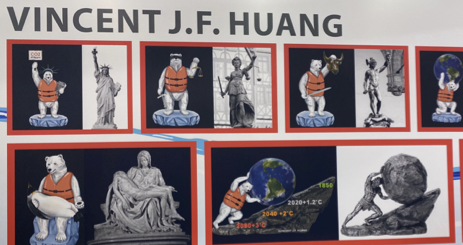
Two memborable installations are the work of Vincent J. F. Huang, featuring polar bears with life jackets imitating famous artworks, on display at the Tuvalu pavilion, and Oliver Jeffers "The Celestial Census," on display outdoors in the Green Zone.  "The Celestial Census" invites visitors to "put on your space helmet and float the dotted line between the Earth and the Moon, all the while considering our home from afar, along as aa single organism.  ... Explore the 36 Meter expanse of space between Earth in which 'All People Live Here' and our Moon, on which 'No One Lives Here.'"


Thursday, November 4, 2021

Significance and Uncertainty


Today, I sat in on a plenary session organized by the SBSTA and the Intergovernmental Panel on Climate Change (IPCC) discussing the latest (6th) assessment report – the AR6 Working Group on Physical Science. Valérie Masson-Delmotte, the Working Group I co-chair, presented some highlights from this very technical report. This session was attended by Parties (government appointees who serve as negotiators) and the observers from civil society. My colleague, Hilde Binford, and I teach a climate science and negotiations course and use these IPCC reports as key resources, so we are quite familiar with the methodology and content. However, many in the audience probably have not waded through all of the technical details. I find the questions from the audience, especially the negotiators, interesting and believe that they illustrate the very different lenses used by scientists and policymakers when looking at such information. 

It has been clear to me for some time now, and reinforced in today’s session, that most people do not understand how scientists deal with uncertainty (data gaps or what we don’t fully understand in complex systems). There is also confusion as to why climate models can be improved over time as new data is gathered and as scientists gain a better understanding of interactions of multiple variables, etc. I firmly believe that we, as scientists and educators, have a responsibility to help translate or explain this detailed information to various audiences both at the COP and back at home. 

Some of the negotiators raised questions (or objections) that were politically motivated, rather than out of a lack of understanding. For example, one particular representative from India was essentially asking for the highest risk scenario to be removed from the report claiming that *some* impacts are unlikely “doomsday scenarios”. This negotiator added that “COPs are supposed to deliver messages of hope and optimism” and the scientists who wrote the IPCC report were not doing that. (It was difficult at that moment for me not to ask what policymakers have done to increase hope and optimism since 1992 when the U.N. Framework Convention on Climate Change was originally established.) The Working Group co-chair reminded the audience about the charge to the IPCC from the Parties and about the importance of using the same five emission scenarios across all working groups to determine future possibilities of climate change impacts and risk. Understanding risk and the associated probabilities (e.g. high or low risk) is essential for making sound policy decisions, for the re-insurance industry, knowing were to make effective investments in disaster risk reduction, etc. 

Think about the “cone” of probability of where a hurricane that forms in the Atlantic might make landfall along the U.S. coastline. Early on, that cone is wide, as there is a lot of uncertainty about the track a storm might take or how strong the hurricane might get. With increased data and as the hurricane moves closer to the coastline, scientists are able to increase the accuracy of the model or decrease the uncertainty in predicting the behavior of the storm and the location of landfall. Early predictions alert people to the probability of danger, giving them time to prepare (evacuate, board up a dwelling, stock up on supplies, etc.). If forecasters waited until they had 100% certainty of the landfall site, it would be too late for people to reduce their risk of danger, damage to their property, or being left without food and water for an extended period of time. There are, of course, many analogies in modeling future climates.

Much thought goes into the IPCC reports in terms of how to communicate both spatial and temporal uncertainty and risk. So, what would be the advantage of eliminating the low probability/high emissions scenario? I can’t speak for certain as to the motives of that negotiator, but if the impacts or risk in the report don’t look so bad, or if the serious problems look like they may not take hold for some time far into the future, is there not then a reason to delay the shift away from fossil fuels? Policy makers must consider many factors unique to their country, but scientists must maintain scientific and reporting integrity. 

As one colleague that I was talking with afterwards put it, the chances of crashing a car (or plane) are low, but we still wear our seatbelts. The chances of serious climate impacts are not low, so we really should be taking action to both mitigate the problem and adapt to the changes that are already locked in for our future. 

I learned later that this same negotiator has been criticizing the work of the IPCC for some time. And I was also reminded of a recent news report that aired before I left for Glasgow in which a number of high-level officials from India indicated that they plan to use coal for the foreseeable future as that country strives to improve its socio-economic status. India currently relies on coal for 70% of its power. 

 ~~ 

Many researchers I have talked to this week are attending their first COP and feeling a) overwhelmed by all that happens at the conference (that is typical) and b) questioning the significance of their role here. This is my twelfth COP, so I reflected on this a bit today. Attending these conferences is a privilege that most people in the world never get to experience. My voice at “the table” may seem insignificant, but I am here, and I have a voice. So many people around the world – already impacted by climate change in severe ways – do not. I am exposed to the process and details of international negotiations. I am able to gain both a great deal of knowledge from global experts and new perspectives from talking to people who come from very different cultures and life circumstances than I do. 

With this privilege comes responsibility. One of our responsibilities is to seriously consider what we each do with this information when we go back home: 
- Do we share it with the public, with local and regional decision makers, with our colleagues and institutions? If so, what is the best way to do so?
- How do we inform relevant people of the data gaps that would better inform policy at the local, national and international levels and advocate for research funding to support the needed work? 
- How do we put all that science (from IPCC reports or regional data) to action to address this global challenge? How do we put the knowledge gained to positive action? 

I know that my attendance at these United Nation events has increased my credibility back home, and, as such, I have been asked over the years to provide input for policy development especially related to adaptation, risk reduction, and capacity building at the local and state levels. I am asked by a wide range of stakeholder groups to give talks about the status of climate change and climate policy or to write opinion pieces for the local papers. The knowledge gained has allowed me to redesign what and how I co-teach a course in climate science and negotiations. And I know how many former students who have taken that course and then attended one of the COPs on Moravian’s credentials have ended up having their career paths dramatically altered by the experience or a chance meeting with someone on this international stage. 

And that is far from insignificant.

Wednesday, November 3, 2021

“Biodiversity, not Bitcoin, is the new currency”


Today is “Finance” Day at COP26, and the US Center celebrated LEAF (Lowering Emissions by Accelerating Forest Finance Coalition). The coalition includes the USA, UK and Norway, with support from large corporations, including Amazon, Airbnb, Blackrock, Walmart, and Nestle. In their first year, they have raised $1bn. Twenty-three countries have prepared proposals on how to prevent deforestation in their countries, in exchange for financial help.  LEAF is hoping to increase the fund several fold in the next few years. 

The Special Presidential Envoy for Climate, John Kerry, started off the discussion by reminding us that forests and other nature-based systems have the ability to provide 1/3 of total mitigation by 2030. This must be the “decade of decision, implementation and action …. Otherwise we blow through 1.5C.”  The panel included leaders from Ecuador, Ghana, and Nepal, who are three of the first five countries who have signed Letters of Intent (LOI) with LEAF.  All three leaders were positive about the new financing possibilities, and the Ecuadorian leader suggested that biodiversity is the new currency. 

Related, in the first days of the COP, 110 leaders promised to end deforestation by 2030, and the represented countries cover 85% of the world’s forest.  $14bn of funding has been secured. However, LEAF is poised to begin more immediate action, and emphasizes that the next decade is critical. 

In other meetings with indigenous peoples, there was some skepticism towards the pledge to protect forests.  Are companies simply paying for carbon credits and continuing with business as usual? Are the rights of indigenous peoples to their lands being upheld? At the COP Presidency Dialogue on the LCIPP, one of the audience members warned about the “commodification of Mother Earth and Father Sky.”  If biodiversity is the “new currency,” it seems they have a point. 

Catching up


I am juggling multiple roles at COP26 and it takes a bit of time to adjust to the new time zone, so I am slow to blogging so far this week. At most COPs, the “high level segment” (ministerial-level deliberations) begins in week #2. This year, however, the COP kicked off with a very high level World Leaders Summit; numerous presidents and prime ministers were in the venue on Monday and Tuesday, each having the opportunity to deliver a national statement. It was very difficult for observers from NGOs to access the venue, but the event was live-streamed. For those in the U.S., President Biden’s remarks may be of interest. Much was made of which heads of state did not arrive, especially China’s president, Xi Jinping (although he submitted a written statement), Russia’s President Vladamir Putin, Brazil’s President Jair Bolsonaro, and Turkey’s President Tayyip Erdogan. Official reasons varied. In Paris in 2015, I was fortunate to be in the room when all of these individuals were present and spoke.

Before the national statements, there was an opening ceremony entitled “Earth to COP”. Because we are in Scotland, it wasn’t surprising that this started with a bagpiper (Brìghde Chaimbeul), who was then followed by a powerful poet, Yrsa Daley-Ward, who noted, ‘Anything less than your best is too much to pay.” I was struck by the comments of Boris Johnson who used the typical James Bond film opening scenario of being “strapped to a doomsday device” as a metaphor for COP26 and the situation the world leaders find themselves in. He made references to a ticking clock, billions of pistons fired by fossil fuels, and the consequences of inaction for our children and the fifty percent of the world population that is under the age of 30 (for which action by 2050 will be too late). He even quoted Greta Thunberg and the typical “blah, blah, blah” that occurs without true action at these sessions. Johnson noted that the James Watt (a Scottish inventor, engineer and chemist) -- who made significant improvements on the steam engine which were fundamental to the Industrial Revolution – build this first doomsday clock. 

This opening session employed the arts, Sir David Attenborough, indigenous speakers, and emotion to set the stage for the two weeks. Besides the urgent need to increase ambition on reducing greenhouse gas emissions, there is a need to focus on adaptation and resilience, climate finance, environmental justice, and sustainable development. In early days of this COP, Biden's team (made up of many climate negotiations veterans) is talking forests, ecosystems and environmental justice. Those are not topics I have previously heard mentioned by the U.S. delegation since I started closely following the U.S. positions at these negotiations back in 2009!