Monday, November 8, 2021

Anger, activism, action and oh yes, the U.S. is back!

I was involved in a lively discussion over the weekend with students and others about Greta and whether her anger and negativism about the COP is helping or hurting the climate movement. I totally understand the frustration and anger of the youth, but as someone who has been following climate change science for decades and attending the COPs since 2009, my perspective on progress is perhaps a bit different. The official deliberations that take place at the COPs send strong signals to markets and the private sector. Both innovative advancements in clean energy and the major drop in the pricing of solar and wind over the past decade have been remarkable. According to comments made by John Kerry and Al Gore here at the COP, in the past year, 90% of the electricity that came online globally was from clean, renewable sources. Numerous corporations publicly display sustainability and climate change goals on their websites, and most have hired a sustainability director and sometimes a full team within the organization. Pressure to do so has come from consumers and from the board room. While the political maneuvering and the slow pace of international decision-making can be frustrating, I sincerely believe that these COP sessions keep pressure on governments and the private sector to continue their work towards critical climate action.

After the absence of the U.S. from the Paris Agreement for a few years under the last administration, and therefore, our relative inaction in the climate sphere, including at the COPs, the proverbial eyes of the world are on us now. What is particularly obvious to those of us on the ground in Glasgow is that the U.S. is here in full force: in the negotiation sessions, at high level events, at the U.S. Pavilion (which didn’t exist for a few years), and at the U.S. Climate Action Center.

Gina McCarthy was the head of the EPA under the Obama Administration and now serves as the first White House National Climate Advisor under U.S. President Joe Biden. I had heard her speak at conferences in the past and was always impressed. So when I had the opportunity to participate in a small group roundtable discussion with her last week, I was pretty excited.

Gina McCarthy at the U.S. Climate Action Center

She began her comments by claiming how the U.S. is back in the Paris Agreement, noting that we are not yet back as the leaders we once were. She admitted that we need to demonstrate strong actions both domestically and here at the COP to rebuild trust after the last administration. She spoke of Biden’s commitment to the addressing climate change and to people; indeed, he “views the climate issue as a people issue.” The national climate task force was established Day 1 of the Biden administration and McCarthy chairs the monthly meetings. If you haven’t read it, the January 27th 2021 Executive Order on tackling climate change provides detailed charges to the members of the cabinet. In fact, according to McCarthy, all cabinet members are charged to think about climate change "even if it is not in their job description." She stressed the new focus on both inter-agency cooperation and the need for intergovernmental work between the federal level and local and tribal governing bodies.

McCarthy and several other high-ranking officials from the U.S. have mentioned indigenous rights, human rights, and environmental justice. McCarthy even acknowledged concerns about the potential impact of Article 6 (of the Paris Agreement) on treaty lands of indigenous people. These topics have not been discussed by the U.S. officials so openly in the past. McCarthy also referred to a number of announcements that will be made at the COP, a forthcoming sustainability executive order from President Biden, and the opportunities for youth through the Climate Conservation Corps.

Besides McCarthy, there are a high number of cabinet level and other high-ranking officials from the U.S. here: 

- John Kerry, former Secretary of State, now serving as the first United States Special Presidential Envoy for Climate, has been doing a number of talks and giving announcements about what the U.S. is doing and plans to do going forward. Last Friday, he held a press conference provide updates on the COP.

See some coverage here and here.

- Jennifer Granholm, former governor of Michigan, is now Secretary of Energy and a leader in the Mission Innovation initiative. 

See some coverage here.

- Deb Halland, Secretary of the Department of Interior, is getting a lot of coverage; see examples here, here and here. Given the strong focus of civil society on indigenous rights and traditional knowledge, this is not surprising.

- Samantha Power, Administrator of the United States Agency for International Development (joined virtually in week 1, coming for week 2).

- Rachel Levine, admiral in the United States Public Health Service Commissioned Corps, and U.S. Assistant Secretary for Health participated in an all-day Global Climate and Health conference over the weekend that was held in Glasgow and virtually.

- Antony J. Blinken Secretary of State opened the U.S. Center in week 1 and it is worth reading his comments from that ceremony.

- Secretary of the Treasury, Janet L. Yellen provided remarks on “Delivering Finance for Emerging Markets and Developing Economies.” 

In total, 8 cabinet members and 5 other senior administrative officials are scheduled to be in Glasgow. This is in addition to President Biden who was here for the first few days of week 1 to attend the World Leaders Summit and former President Obama who is “in the house” on day 1 of week 2. 

Other officials scheduled to be at COP26 include: 

- Pete Buttigieg, Transportation 

- Michael Regan, EPA Administrator 

- Tom Vilsack, Agriculture Secretary 

- Rick Spinrad, NOAA Administrator 

- Eric Lander, White House Office of Science and Technology Policy Director

- Brian Deese, the National Economic Council director

To date, announcements relating to methane reductions, reductions in GHG emissions from health care sector including hospitals and pharmaceutical and biomedical device industries, funds for adaptation and resilience, and international assistance have been made. There may be others, but it is difficult to keep up with all the activity with so many negotiation threads, side events, and off-site events occurring at any one time.

Immediately prior to the COP, G20 leaders pledged to end financing for international coal plants by the end of this year. However, there was no movement on ending the domestic use of coal power. It is worth noting, however, that back in 2019, the G20 agreed on the phase-out of fossil fuel subsidies, but later, backpedaled on this. (See also here.)

Given the data and language of urgency in the latest report of the IPCC (AR6), it is important to hold these officials accountable to the promises they are making on the international stage. At this point of the COP, unlike Greta, I am not ready to call this COP a failure. Rather, I am encouraged to see the strong U.S. presence and hear how articulate the officials are about the wide range of relevant issues, including pathways to a net-zero, or at least a low-carbon future.




Sunday, November 7, 2021

Global Collaboration Leads to New Horizons

 As I wrap up my week in Glasgow, I found myself reflecting back on my time spent at Moravian. Not really knowing where exactly I wanted my career to lead to, I found myself registering for my final semester at the end of the Fall 2020 semester. I was torn between really just being exhausted from having to make the abrupt adaptation to a whole new learning system and quite frankly just wanting to get the degree over with, or expanding my horizons in hopes of finding a better sense of direction. But we'll get back to that in just a second. 

That same semester [Fall 2020], I had decided to take the Climate Negotiations course that was offered, which is taught by both Dr. Husic and Dr. Binford, both of which are here with me at the COP26. The course taught quite literally what is in the name, negotiations about climate science and policy on different levels, along with additional topics. One week specifically, we had a guest speaker call-in to our class [via zoom] to speak about the cryosphere and how the specifics of the topic related to the class. Dr. Heïdi Sevestre, a French glaciologist who specializes in the dynamics of glaciers in the polar regions, while also spends time to focus on the interface of science-policy and communication. I was particularly looking forward to her talk, and I specifically remember being so intrigued by the topic that I went up to Dr. Husic after class ended to ask for her email. I was specifically interested in learning more about the mountain-building events in Antarctica. The rest sort of just fell into place from there; we contacted back and forth for quite some time after that, largely just sending scientific articles about Antarctica. 

Backtracking to the first paragraph - when it came time to register for classes for my final semester at Moravian, I hit quite the roadblock after finding out that I could not get a seat in a geology course at one of the neighboring universities. Upon discussion with Dr. Husic, she asked if I would have interest in doing an independent study. Knowing that I had a particular interest in geology and really enjoyed Dr. Sevestre's talk about glaciology, she suggested that I reach out to her to see if she would be willing to facilitate an independent study. I remember feeling quite intimidated by the thought of it, but I took the shot and reached out. Shortly after, she responded quite enthusiastically and shared that she thought that was a fantastic idea, and wanted to set up a video conference to begin discussing the specifics. We chose the project to surround an introduction to glacial and geomorphological mapping [of Gandbreen, a surge-type glacier located on Edgeøya, one of the islands in Svalbard, Norway). This would involve both an introduction to glaciology, but also a concurrent introduction to Geographic Information Systems (GIS) technologies [I was taking the Moravian GIS course at the same time]. Going into the project, I knew very little on glaciology and absolutely nothing about GIS. So, I considered her to be my instructor in both glaciology and the geomorphological mapping aspects of GIS.

Dr. Sevestre would give me a chapter to read a week and we would touch base [remotely via zoom] every Friday to go over any questions I had, and to instruct me on the specifics to get ball rolling on the mapping aspect of the project. The project took off quite quickly, and the mapping portion of the project was done by the midterm-point of the semester. At that point, I knew practically all there is to know about surge-type glaciers. It was also at that point that I knew that this was my calling; i.e. glaciology was the field for me. 

The way that the second half of the semester pertaining my independent study was structured was quite different than the first half, as Dr. Sevestre was actually going on the first all-female AND first carbon neutral research expedition in Svalbard (read more at https://www.climatesentinels.com). So, the remaining part of the semester consisted of putting together the research paper itself, and really tying everything together. I don't think I've ever been so motivated and enthralled to write a paper in my entire undergraduate career. In addition to that, I submitted an abstract to the Youth Environmental Alliance in Higher Education and proceeded to present about my research at their 3rd Global Virtual Conference. That abstract and presentation has since been officially published by the program. The rest of the semester flew by and soon enough, Dr. Sevestre touched back to mainland and we were able to conclude the independent study.

During our "last" video chat of the semester, Dr. Husic, Dr. Sevestre, and I touched base to go over the overall progress and took some time to reflect. Reflections upon the limits that can be surpassed by remote learning; remote in more than one sense. Remote due to the COVID-19 pandemic causing the GIS lab to be closed, so I had to remotely connect to a GIS desktop through a VPN. Remote because I could not be in Dr. Sevestre's presence - there was a whole ocean between us. Remote because I could not go out into the field to observe Gandbreen, so the use of satellite imagery and remote sensing were put in place. During that last chat, Husic and Sevestre began a discussion about the COP26 at the end of the year, and I remember thinking how cool would it be to not only attend such an important event, but to also meet my mentor. 

Fast forward a few months [I graduated 😊], I found myself entering the world's largest climate summit. And with the heavy burden of knowing that this conference must be extremely proactive to minimize the devastating impacts that the climate crisis will continue to bring,  I was also excited to network and explore new possibilities (and to meet Heïdi, of course). 

And that's exactly what the week persisted of. 

I had the absolute honor to meet my friend, inspiration, and mentor to all things glaciology, Dr. Heïdi Sevestre. I was able to network with scientists and other environmental professionals from all over the globe. I was able to hear the stories and perspectives from those who can't be heard from back home. All thanks to global collaboration. 

With exciting opportunities to follow and some very exciting news about where I should end up for graduate school, I can give myself a fair amount of credit for having a fiery passion for the planet, however I also wouldn't be where I am without Dr. Husic and Dr. Sevestre. 

Diane, Heïdi - if you're reading this, thank you.

My advice to students is to take your passion and run with it. Don't be afraid to take a leap, it may lead you to new horizons. And most importantly something that a high school teacher once told me and is going to stick with me for the rest of my life, no effort you make is ever wasted. Cheers. 


Friday, November 5, 2021

"Vital Signs of the Planet"

Over 100 young musicians from the Royal Conservatoire of Scotland and Juniors Conservatoire joined with international youth leaders to present "Vital Signs of the Planet" in the Glasgow Royal Concert Hall.  With films and pictures from National Geographic and NASA, the backdrop to the orchestra was views of our planet on a large screen that were thematically selected to complement the music and to illustrate the impact of climate change.

After an opening traditional tune with bagpipes, the orchestra played excerpts from Vivaldi’s Four Seasons, Debussy’s La Mer, Vaughan Williams Sinfonia Antarctica, and Giacchino’s Advent.  The finale was a clear favorite for the young performers, with a live performance of “Unwritten” by UK Grammy-award winning singer-songwriter, Natasha Bedingfield.  Between the pieces, there were brief statements from youth leaders from around the world who are here for the COP, and a video statement from two of the astronauts on the International Space Station. The thematic program worked well, and the performers earned their standing ovation. 

It is not just the concert hall where art is making an impact.  There are exhibits in the Blue Zone (including at different country pavilions) and Green Zone, posters on the streets, and installations.  There was an event at the Cryosphere Pavilion focussed on art and music, where Ambassador Stuart Eizenstat reminded us that art, music and culture can "inspire us to do more."  We also heard from composer Lera Auerbach, who composed Arctica, her fourth symphony and watched a film about the creation of the work. Miranda Massie also presented some of the projects the Climate Museum has sponsored. 

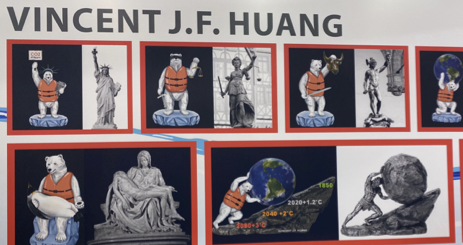
Two memborable installations are the work of Vincent J. F. Huang, featuring polar bears with life jackets imitating famous artworks, on display at the Tuvalu pavilion, and Oliver Jeffers "The Celestial Census," on display outdoors in the Green Zone.  "The Celestial Census" invites visitors to "put on your space helmet and float the dotted line between the Earth and the Moon, all the while considering our home from afar, along as aa single organism.  ... Explore the 36 Meter expanse of space between Earth in which 'All People Live Here' and our Moon, on which 'No One Lives Here.'"


Thursday, November 4, 2021

Significance and Uncertainty


Today, I sat in on a plenary session organized by the SBSTA and the Intergovernmental Panel on Climate Change (IPCC) discussing the latest (6th) assessment report – the AR6 Working Group on Physical Science. Valérie Masson-Delmotte, the Working Group I co-chair, presented some highlights from this very technical report. This session was attended by Parties (government appointees who serve as negotiators) and the observers from civil society. My colleague, Hilde Binford, and I teach a climate science and negotiations course and use these IPCC reports as key resources, so we are quite familiar with the methodology and content. However, many in the audience probably have not waded through all of the technical details. I find the questions from the audience, especially the negotiators, interesting and believe that they illustrate the very different lenses used by scientists and policymakers when looking at such information. 

It has been clear to me for some time now, and reinforced in today’s session, that most people do not understand how scientists deal with uncertainty (data gaps or what we don’t fully understand in complex systems). There is also confusion as to why climate models can be improved over time as new data is gathered and as scientists gain a better understanding of interactions of multiple variables, etc. I firmly believe that we, as scientists and educators, have a responsibility to help translate or explain this detailed information to various audiences both at the COP and back at home. 

Some of the negotiators raised questions (or objections) that were politically motivated, rather than out of a lack of understanding. For example, one particular representative from India was essentially asking for the highest risk scenario to be removed from the report claiming that *some* impacts are unlikely “doomsday scenarios”. This negotiator added that “COPs are supposed to deliver messages of hope and optimism” and the scientists who wrote the IPCC report were not doing that. (It was difficult at that moment for me not to ask what policymakers have done to increase hope and optimism since 1992 when the U.N. Framework Convention on Climate Change was originally established.) The Working Group co-chair reminded the audience about the charge to the IPCC from the Parties and about the importance of using the same five emission scenarios across all working groups to determine future possibilities of climate change impacts and risk. Understanding risk and the associated probabilities (e.g. high or low risk) is essential for making sound policy decisions, for the re-insurance industry, knowing were to make effective investments in disaster risk reduction, etc. 

Think about the “cone” of probability of where a hurricane that forms in the Atlantic might make landfall along the U.S. coastline. Early on, that cone is wide, as there is a lot of uncertainty about the track a storm might take or how strong the hurricane might get. With increased data and as the hurricane moves closer to the coastline, scientists are able to increase the accuracy of the model or decrease the uncertainty in predicting the behavior of the storm and the location of landfall. Early predictions alert people to the probability of danger, giving them time to prepare (evacuate, board up a dwelling, stock up on supplies, etc.). If forecasters waited until they had 100% certainty of the landfall site, it would be too late for people to reduce their risk of danger, damage to their property, or being left without food and water for an extended period of time. There are, of course, many analogies in modeling future climates.

Much thought goes into the IPCC reports in terms of how to communicate both spatial and temporal uncertainty and risk. So, what would be the advantage of eliminating the low probability/high emissions scenario? I can’t speak for certain as to the motives of that negotiator, but if the impacts or risk in the report don’t look so bad, or if the serious problems look like they may not take hold for some time far into the future, is there not then a reason to delay the shift away from fossil fuels? Policy makers must consider many factors unique to their country, but scientists must maintain scientific and reporting integrity. 

As one colleague that I was talking with afterwards put it, the chances of crashing a car (or plane) are low, but we still wear our seatbelts. The chances of serious climate impacts are not low, so we really should be taking action to both mitigate the problem and adapt to the changes that are already locked in for our future. 

I learned later that this same negotiator has been criticizing the work of the IPCC for some time. And I was also reminded of a recent news report that aired before I left for Glasgow in which a number of high-level officials from India indicated that they plan to use coal for the foreseeable future as that country strives to improve its socio-economic status. India currently relies on coal for 70% of its power. 

 ~~ 

Many researchers I have talked to this week are attending their first COP and feeling a) overwhelmed by all that happens at the conference (that is typical) and b) questioning the significance of their role here. This is my twelfth COP, so I reflected on this a bit today. Attending these conferences is a privilege that most people in the world never get to experience. My voice at “the table” may seem insignificant, but I am here, and I have a voice. So many people around the world – already impacted by climate change in severe ways – do not. I am exposed to the process and details of international negotiations. I am able to gain both a great deal of knowledge from global experts and new perspectives from talking to people who come from very different cultures and life circumstances than I do. 

With this privilege comes responsibility. One of our responsibilities is to seriously consider what we each do with this information when we go back home: 
- Do we share it with the public, with local and regional decision makers, with our colleagues and institutions? If so, what is the best way to do so?
- How do we inform relevant people of the data gaps that would better inform policy at the local, national and international levels and advocate for research funding to support the needed work? 
- How do we put all that science (from IPCC reports or regional data) to action to address this global challenge? How do we put the knowledge gained to positive action? 

I know that my attendance at these United Nation events has increased my credibility back home, and, as such, I have been asked over the years to provide input for policy development especially related to adaptation, risk reduction, and capacity building at the local and state levels. I am asked by a wide range of stakeholder groups to give talks about the status of climate change and climate policy or to write opinion pieces for the local papers. The knowledge gained has allowed me to redesign what and how I co-teach a course in climate science and negotiations. And I know how many former students who have taken that course and then attended one of the COPs on Moravian’s credentials have ended up having their career paths dramatically altered by the experience or a chance meeting with someone on this international stage. 

And that is far from insignificant.

Wednesday, November 3, 2021

“Biodiversity, not Bitcoin, is the new currency”


Today is “Finance” Day at COP26, and the US Center celebrated LEAF (Lowering Emissions by Accelerating Forest Finance Coalition). The coalition includes the USA, UK and Norway, with support from large corporations, including Amazon, Airbnb, Blackrock, Walmart, and Nestle. In their first year, they have raised $1bn. Twenty-three countries have prepared proposals on how to prevent deforestation in their countries, in exchange for financial help.  LEAF is hoping to increase the fund several fold in the next few years. 

The Special Presidential Envoy for Climate, John Kerry, started off the discussion by reminding us that forests and other nature-based systems have the ability to provide 1/3 of total mitigation by 2030. This must be the “decade of decision, implementation and action …. Otherwise we blow through 1.5C.”  The panel included leaders from Ecuador, Ghana, and Nepal, who are three of the first five countries who have signed Letters of Intent (LOI) with LEAF.  All three leaders were positive about the new financing possibilities, and the Ecuadorian leader suggested that biodiversity is the new currency. 

Related, in the first days of the COP, 110 leaders promised to end deforestation by 2030, and the represented countries cover 85% of the world’s forest.  $14bn of funding has been secured. However, LEAF is poised to begin more immediate action, and emphasizes that the next decade is critical. 

In other meetings with indigenous peoples, there was some skepticism towards the pledge to protect forests.  Are companies simply paying for carbon credits and continuing with business as usual? Are the rights of indigenous peoples to their lands being upheld? At the COP Presidency Dialogue on the LCIPP, one of the audience members warned about the “commodification of Mother Earth and Father Sky.”  If biodiversity is the “new currency,” it seems they have a point. 

Catching up


I am juggling multiple roles at COP26 and it takes a bit of time to adjust to the new time zone, so I am slow to blogging so far this week. At most COPs, the “high level segment” (ministerial-level deliberations) begins in week #2. This year, however, the COP kicked off with a very high level World Leaders Summit; numerous presidents and prime ministers were in the venue on Monday and Tuesday, each having the opportunity to deliver a national statement. It was very difficult for observers from NGOs to access the venue, but the event was live-streamed. For those in the U.S., President Biden’s remarks may be of interest. Much was made of which heads of state did not arrive, especially China’s president, Xi Jinping (although he submitted a written statement), Russia’s President Vladamir Putin, Brazil’s President Jair Bolsonaro, and Turkey’s President Tayyip Erdogan. Official reasons varied. In Paris in 2015, I was fortunate to be in the room when all of these individuals were present and spoke.

Before the national statements, there was an opening ceremony entitled “Earth to COP”. Because we are in Scotland, it wasn’t surprising that this started with a bagpiper (Brìghde Chaimbeul), who was then followed by a powerful poet, Yrsa Daley-Ward, who noted, ‘Anything less than your best is too much to pay.” I was struck by the comments of Boris Johnson who used the typical James Bond film opening scenario of being “strapped to a doomsday device” as a metaphor for COP26 and the situation the world leaders find themselves in. He made references to a ticking clock, billions of pistons fired by fossil fuels, and the consequences of inaction for our children and the fifty percent of the world population that is under the age of 30 (for which action by 2050 will be too late). He even quoted Greta Thunberg and the typical “blah, blah, blah” that occurs without true action at these sessions. Johnson noted that the James Watt (a Scottish inventor, engineer and chemist) -- who made significant improvements on the steam engine which were fundamental to the Industrial Revolution – build this first doomsday clock. 

This opening session employed the arts, Sir David Attenborough, indigenous speakers, and emotion to set the stage for the two weeks. Besides the urgent need to increase ambition on reducing greenhouse gas emissions, there is a need to focus on adaptation and resilience, climate finance, environmental justice, and sustainable development. In early days of this COP, Biden's team (made up of many climate negotiations veterans) is talking forests, ecosystems and environmental justice. Those are not topics I have previously heard mentioned by the U.S. delegation since I started closely following the U.S. positions at these negotiations back in 2009!

Sunday, October 31, 2021

COP26 - A year late

A view from the Frankfort Airport - it is not raining!

Good morning and Greetings from the Frankfurt, Germany airport. I have a layover on my way to Glasgow and COP26 and am a bit groggy from too little sleep on an overnight flight from Newark, NJ. 

COP26 refers to the 26th Conference of the Parties (signatories) of the United Nations Framework Convention on Climate Convention (UNFCCC). With the pandemic, it has been much more of an ordeal to prepare than usual and with many heads of state attending, including President Biden, security will be extraordinarily tight. But let's hope that these leaders will make significant progress towards addressing reduction of greenhouse gas emissions, adaptation and resilience to a changing world, and climate finance to help developing nations advance in a low carbon future.

The Moravian University (formerly College) delegation will not have any students attending in person this year, due to the State Department risk level for the UK and an institutional decision not to let them travel to Scotland. Dr. Hilde Binford and I will do our best to share what we are hearing and learning “on the ground”.  Two current students, Sam Does (Senior Environmental Science major) and Keegan Schealer (Senior Environmental Economics and Policy major), will join in virtually as delegates. Keegan will also be presenting as part of our NSF-funded Youth Environmental Alliance in Higher Education (YEAH) initiative.

Four Moravian alums (that we know of) will also be attending either in person or virtually: Sarabeth Brockley ('10, Environmental Science) Chelsea Hill ('21, Environmental Science) Melissa Morales ('21, Environmental Science) René Wiesner Brown, PhD ('94 Biology/Natural Resource Management).

Besides representing Moravian and YEAH, I will also be representing the Research and Independent NGOs (RINGOs) as a steering committee member for this official constituency group of the UNFCCC and the Global Council for Science and the Environment.

To get a sense of what is happening each day at the COP, you can check the Overview Schedule, the Daily Programme, News, and the Side Events schedule (which begin on Wednesday). Monday and Tuesday will be devoted to the World Leaders Summit where heads of state will give their statements laying out the framework for any country's delegation during the negotiations. These are always fascinating to listen to. Due to security and space constrictions, it may be difficult to get into the venue to watch this in person, but I am hoping this will be live-streamed. Since President Biden is attending, I am sure that he will speak. In Paris (2015), I was fortunate to be in the room to hear Obama, Putin, Merkel, and several other heads of state ("The room where it happens" is going through my head, if you know this reference from the Broadway show Hamilton).

In a newsletter that registered COP delegates received on October 30th , there was a glimpse at the PR themes that will be used throughout the next two weeks including "TogetherForOurPlanet" and "Shepherd-in-Chief" for the COP26 President Designate (chosen by the host country). You can learn a bit about the COP26 President, Alok Sharma here; note the type of roles he has played in the government and consider how that might influence his perspectives.

In the past week or two leading up to COP26, there was a significant amount of coverage about this event in the U.S. media...more so than usual. NPR had many stories (like this one from last week) and this appeared in the New York Times today. We hope you pay attention to how the event is covered on national and local news over the next two weeks.

Sunday, June 27, 2021

Notes and Observations from the May-June 2021 UN Climate Change Conference

I greatly appreciated the opportunity to attend the UN Climate Change Conference, Sessions of the Subsidiary Bodies, as an Observer through Moravian College. As an alumna of the College, I am thankful for the times I have been able to attend in person to interact with the current professors and students and to participate as part of the delegation. Many thanks to Dr. Diane Husic and Dr. Hilde Binford for enabling me to participate in and observe these critical global negotiations.

The May-June Sessions of the Subsidiary Bodies included meetings of the Subsidiary Body for Scientific and Technological Advice (SBSTA) and the Subsidiary Body for Implementation (SBI; of the UNFCCC, the Kyoto Protocol, and the Paris Agreement). Productive formal and informal sessions were held to advance work through and related to the Nairobi Work Programme, Koronivia joint work on agriculture, Adaption Fund, Clean Development Mechanism transition, capacity building, and common reporting. As usual, there was a lot to take in and many concurrent sessions, so the following notes are by no means exhaustive. I am reporting on the sessions I followed, and at the end provide some general observations and thoughts on the virtual conference platform.

Opening Plenaries

Patricia Espinosa, Executive Secretary of UNFCCC, emphasized that Parties must arrive in Glasgow ready to take action. She reminded us that the Paris Agreement is five years old already and that we can’t continue to delay action.

Marianne Karlsen (Norway), SBI Chair - Recognized the challenges of a virtual environment but expressed the importance of convening and that she intends for no issue to be left behind.

Nairobi Work Programme (NWP)

The NWP aims to identify and close knowledge gaps to advance adaptation and resilience. Thematic areas include biodiversity, ecosystems and water resources, human settlements, oceans, human health, gender sensitive approaches, and local, indigenous, and traditional knowledge.

One goal through the biodiversity thematic area is the integration of forests and grasslands biodiversity and ecosystems into adaptation strategies so that multiple benefits are achieved.

The group requested nominations of national adaptation contact points to ensure global and regional efforts are aligned with national agendas and to communicate knowledge gaps.

They plan to collaborate with the Lima Work Programme on gender as well as with the Facilitative Working Group of the Local Communities and Indigenous Peoples Platform.

They are working with the IPCC to incorporate recommendations from IPCC Special Report on Climate Change and Land and the IPCC Special Report on the Ocean and Cryosphere in a Changing Climate.

They are also developing partnerships with universities to address knowledge gaps.

A report was proposed to focus on lessons learned to date and gaps and challenges identified.

Koronivia Joint Work on Agriculture (KJWA)

The KJWA was established in 2017 to facilitate joint work between the SBSTA and SBI to consider 1) the vulnerabilities of agriculture to climate change and 2) approaches to addressing food security.

Countries can integrate these concepts into their Nationally Determined Contributions (NDCs) of the Paris Agreement.

Three major topics were discussed:

Improved nutrient use and manure management

·       Nutrient circularity is key to reducing nutrient loss and waste.

·       Agricultural systems should be designed to optimize carbon and nutrient cycles.

·       Systemic changes are needed and must be country-driven and follow science-based approaches. They should also involve locally appropriate innovation and traditional knowledge.

·       They discussed agroecological practices, using legumes to organically add nitrogen to the soil, integrating crops and livestock, and using manure as organic fertilizer.

·       It was noted that the overuse of fossil-fuel derived fertilizers contributes to emissions, disrupts the nitrogen cycle, and affects surface and ground waters.

·       The soil microbiome was recognized as important for soil health.

·       Nutrient data collection, analysis, and development of decision-making tools were identified needs.

·       They are considering development of an information exchange platform.

 Improved livestock management

·       Livestock are vulnerable to climate change impacts such as drought, floods, heat stress, water availability, low-quality forage, pests, and diseases.

·       There is a need to increase resiliency and adaptive capacity, considering diversity of agricultural practices and systems, local populations, and climate variation.

·       Sustainable consumption, reduction of food waste, and reduction in deforestation should be promoted.

·       Goals include reducing global livestock numbers and emissions, promoting best management practices, and improving pasture management.

·       Action under the KJWA will help achieve Sustainable Development Goals (SDGs), including the global goal of zero hunger.

 Socioeconomic and food security concerns

·       Food systems need to be reconfigured to include circular economy principles and resource efficiency.

·       Benefits of traditional and small farming were acknowledged.

·       Addressing food loss and waste is a major opportunity to reduce GHG emissions and improve food security.

·       The potential of large-scale dietary changes in reducing emissions and other negative externalities was noted.

·       Flexible options are needed to ensure emissions reductions are lasting.

·       All phases of agricultural production need to be considered, including planting, harvesting, storage, transport, sales, consumption, supply chains, and loss/waste.

·       Long-term projects should be favored to provide predictability and enable long-term investments.

·       There is an identified need for climate risk management tools such as livestock and crop insurance, early warning systems, and contingency planning.

Cooperation with other international organizations

Cooperating with other international organizations, particularly other UN bodies, is mandated under Article 7 of the UNFCCC. The SBSTA Chair held an information event to discuss progress and summarize cooperative efforts.

Cooperation with the UN Convention on Biological Diversity, Food and Agriculture Organization, Convention to Combat Desertification, Environment Programme, and the World Bank was discussed and summarized.

Common initiatives that support increased climate ambition and advancement of the Sustainable Development Goals were highlighted.

A need to enhance cooperation was noted.

Clean Development Mechanism (CDM) transition

The CDM was used and developed under the Kyoto Protocol to allow countries to offset emissions by investing in emissions reduction projects. There is considerable discussion about whether and how to transition CDM projects and/or credits to NDCs under the Paris Agreement.

Some Parties expressed that CDM projects should not be abandoned, while others expressed that not all projects may be appropriate because the Paris Agreement is different and more ambitious than the Kyoto Protocol.

Transition proposals may be accepted so that projects may be reviewed and those appropriate to the Paris Agreement goals and ambition may be transferred. It was discussed that there should be a deadline for such proposals.

Some Parties support including appropriate projects in NDCs and moving remaining CDM funds to the Adaptation Fund.

Thoughts on the Virtual Platform

In general, I thought it was fantastic and, of course, critically important that the Parties to the UNFCCC were able to meet again. Progress was made but there is still a lot of work to be done before Glasgow in November.

The Conference’s virtual platform worked well and was well-suited for organizing concurrent sessions with multiple agendas and session notes. The Chairs acknowledged the limitations of meeting virtually but emphasized the importance of convening before Glasgow.

I was disappointed that less sessions seemed to be open to Observers and was unpleasantly surprised that the Conference platform was shut down so soon after the Conference ended. I had been planning to catch up on the weekend after the Conference but could no longer access the virtual conference platform. However, I do note that public webcasts and session notes were still available.

I unfortunately found navigating the poster session to be awkward through an avatar-based platform. I personally would have preferred a list of hyperlinked poster titles with chat features enabled for Q&A and discussions (i.e., a low-tech option). I did not try to speak to poster presenters live and doing so may have changed my opinion of the setup.

Overall benefits of a virtual platform include: convening a conference at all during a difficult time period, more people being able to participate (reportedly 5,800 participants versus 3,400 in the past), ease of participating from home or work, a well-organized virtual platform, on demand and recorded sessions available for later viewing during the conference, considerably less (actually no) expense, and notably a much lower carbon footprint. 

Downsides of a virtual Conference include a lack of informal interactions, limited sessions for Observers, and a feeling of disconnect due to lack of interactions among Observers. Additionally, though I appreciate the inclusive nature of varying the time zones of the sessions each week and wouldn't suggest it any other way, I had some difficulty navigating the different time zones, particularly while working. If I participate virtually in the future, I will take time off work so that I can observe the sessions live. It proved difficult to catch up later due to the time zone differences and the early shut down of the participant platform.

Future hopes: use of a hybrid virtual format with greater quotas for online access as well as quotas for in-person Observer participation, more sessions open to Observers, an option to enable communication among Observers, and an opportunity to submit comments at set times during the Conference.

Despite frustrations noted, progress on Paris Agreement goals is far more important than my ease of access. I am hopeful that the negotiations seemed to be constructive and productive and look forward to continual progress leading up to and during COP26 in Glasgow.


Friday, December 13, 2019

End of week 2 reflections

As I sit in the Madrid airport, I reflect over the last two weeks and wonder if anything productive will come out of COP25. The negotiations continue for at least today, but I must get back home.

 
Some countries still think that we have plenty of time to figure things out (or to continue to ignore the climate change issue), despite the "time is running out" theme that was evident in the interventions of political leaders from cities to the head of the U.N., business leaders, youth, environmental organizations, and even scientists who are typically not prone to cries of urgency. The Emissions Gap report released in November provided a bleak picture of the state of greenhouse gas emissions especially when considered in context of the warnings provided in the IPCC Special Report on 1.5 °C warming (above pre-industrial levels).


One of the strongest voices at COP25 and Time Magazine Person of the Year


If the draft text of the working groups is maintained by the Parties, there will be recognition, for the first time, of the critical importance of the oceans as an integral part of the Earth's climate system for both mitigation and adaptation. Despite alarming reports from the World Health Organization (see also the 2018 report) and the Lancet (a leading, well respected medical journal) that describe the negative health impacts of climate change and from air pollution released during the burning of fossil fuels, human health continues to be notably absent from any COP text except for vague references to human safety.

There do appear to be some advances in working out details for financing mechanisms such as the Green Climate Fund, but little agreement has been reached on regulation of carbon markets.

The Paris Agreement developed in 2015 was for climate action post 2020. There was supposed to be additional work on pre-2020 action, but given that 2020 is less a month away, that article is essentially obsolete.

There was much discussion this week over the effectiveness of the UN process given that it was established in 1992 and there have been 25 annual conference of the parties, but little progress in solving climate change. I heard sharp criticism about the process from both former Secretary of State, John Kerry, and Jonathan Pershing, the former Special Envoy for Climate Change from the State Department and chief negotiator for the U.S. delegation. But while both argued that the real action is going to come at the local and regional (sub-national levels) and from the private sector, they also felt that it is important to keep countries talking as a reminder of the serious nature of this global issue.


Johnathan Pershing on the right


John Kerry

The Research and Independent NGOs, one of nine officially recognized constituencies of observer groups within the UNFCCC, has the opportunity to draft statements (interventions) for key plenary sessions throughout the COP. Because this group doesn’t advocate for any special position other than having evidence-based policy making, our statements are typically subdued or even bland. For whenever the COP closing plenary is, here is the statement that I drafted for this year:

The RINGOs would like to start by expressing appreciation for the Chilean COP Presidency’s recognition of the importance of “putting science at the center of COP25”, as the Minister noted on December 5th. We also applaud the first-ever virtual meeting of country science ministers held on Dec 4th in conjunction with the COP. 

A vast amount of relevant research data has been collected over the past several decades. Through 25 years of COPs, plentiful technical solutions for mitigation and adaptation as well as finance and market mechanisms have been developed, linking research with innovation at private and public levels. As has been said by many at COP25, it is now time to put research and the agreements into ACTION. 

RINGOs welcome the outcomes of COP25, but we urge all of us to continue to play a role in operationalizing and implementing the details of the Paris Agreement back home. Amid all of the technical discussions, the political processes, and acronyms, we must not forget to humanize climate change, and to help people better understand the implications of climate change for their own well-being as well as for the world around them. Through capacity building, we must give people the tools and empowerment to address climate change in their communities. We must push together so that no actor rests for a moment. 

The research community stands ready to serve as knowledge brokers to explain the regional relevance of the scientific evidence and COP decisions in our home communities and countries. We are also prepared to help the transformation of knowledge into day-to-day practice. The RINGOs encourage the private and public sectors to engage in climate action and move to a more circular economy, both in their work and in their local communities. We call for all stakeholders to become involved in promoting and applying science-based climate solutions. 

In conclusion, the RINGOs would like to express our sincere and deepest gratitude to the Governments and people of Chile and Spain for pulling together COP25 in such a short time. This was a good example of how the global north and south can come together and accomplish a great task - a metaphor for what we all now need to do to advance the provisions of the Paris Agreement and COP25.

Wednesday, December 11, 2019


With 2020 only 20 days away, subnational actors must be part of the equation


At the COP25 in Madrid, there is an emphasis on the role subnational actors can and should play in emissions reductions. According to Local Governments for Sustainability (ICLEI), cities, for example, account for 80% of global GDP and 70% of emissions, and yet 90% of emissions from cities can be reduced with current technology. To raise ambition, countries should work with subnational partners to achieve Paris Agreement targets and Agenda 2030 Sustainable Development Goals (SDGs). This is especially relevant as Nationally Determined Contributions (NDCs) to the Paris Agreement are up for renewal in 2020.

The Mayor of Bonn, Germany and ICLEI President, Ashok Sridharan, acknowledged the urgent nature of the problem, as highlighted by our youth taking to the streets. Bonn has pledged climate neutrality no later than 2035 and has identified more than 300 measures to enhance climate action that will be presented to their city council in the near future. Close to 300 cities have declared climate neutrality, and with the 50th anniversary of Earth Day around the corner, ICLEI asserts that now is the time for more cities to make this commitment.  

Turku, Finland, has innovative programs that have attracted international attention. Minna Arve, the Mayor of Turku, said they are transitioning to renewable energy by 2025, are phasing out coal, and have committed to longer-term goals so that there will be political continuity. They are taking strides towards a circular economy by setting goals to become waste-free and have developed a platform to involve large and small businesses and universities.  

The Mayors of Recife, Brazil, and Pittsburgh, Pennsylvania discussed ways that cities can contribute to climate action despite lack of federal support. Recife has pledged neutrality by 2050 with significant action by 2030, and an integration of climate change into the school curriculum, which, by its nature, informs and engages families. Pittsburgh has focused on rebuilding the city in a post-industrial era, with an emphasis on technology and a P4 policy that tax-funded projects must address all four economic standards of people, planet, place, and performance.


The private sector also has a significant role to play in increasing ambition towards Paris Agreement targets and Sustainable Development Goals.  British Telecommunications is one of the first companies to set a 1.5°C goal and has pledged net zero by 2045 and an 80% reduction in emissions by 2030. They have invested in renewable energy, are transitioning to an electric fleet, and have created smart apps for transport to reduce wasted emissions (and time) spent searching for parking. They require their suppliers to reduce emissions and have thereby found that buyers have considerable power and send critical demand signals to the market. Through their combined efforts, they saved 11.7 million tons of carbon last year.

The Coalition for Urban Transitions recently launched a report Climate Emergency, Urban Opportunity (link) that involved more than 50 partners. It emphasizes that investments now will yield benefits that exceed costs. Cities will be cheaper to build and operate and tens of millions of jobs will be created with green innovation.

The Global Covenant of Mayors for Climate and Energy also had a strong showing at the COP. New York City Mayor Michael Bloomberg spoke of the impending paradigm shift that should be all-inclusive and leave no one behind. He said if we don’t shape it, something else (i.e., the climate) will. It was also discussed that cities present the biggest challenges to climate action and sustainability but also the biggest opportunities.


In addition to their critical role in emissions reductions, the Global Environmental Facility, a Fund established in 1992 to help address environmental problems of global significance, has found that cities are ideal for pilot projects and new program incubation. However, collaboration with federal and state governments is needed for efficient implementation. As an example, to reduce emissions in the transportation sector, federal governments can establish vehicle efficiency standards, state and regional governments can establish electric vehicle charging networks, and local governments can create and enact zoning regulations for walkable communities. With COP25 Chile-Madrid the last COP before 2020, and indeed, with 2020 a mere 20 days away, this is the right moment for increased ambition and collaboration at national and subnational levels.